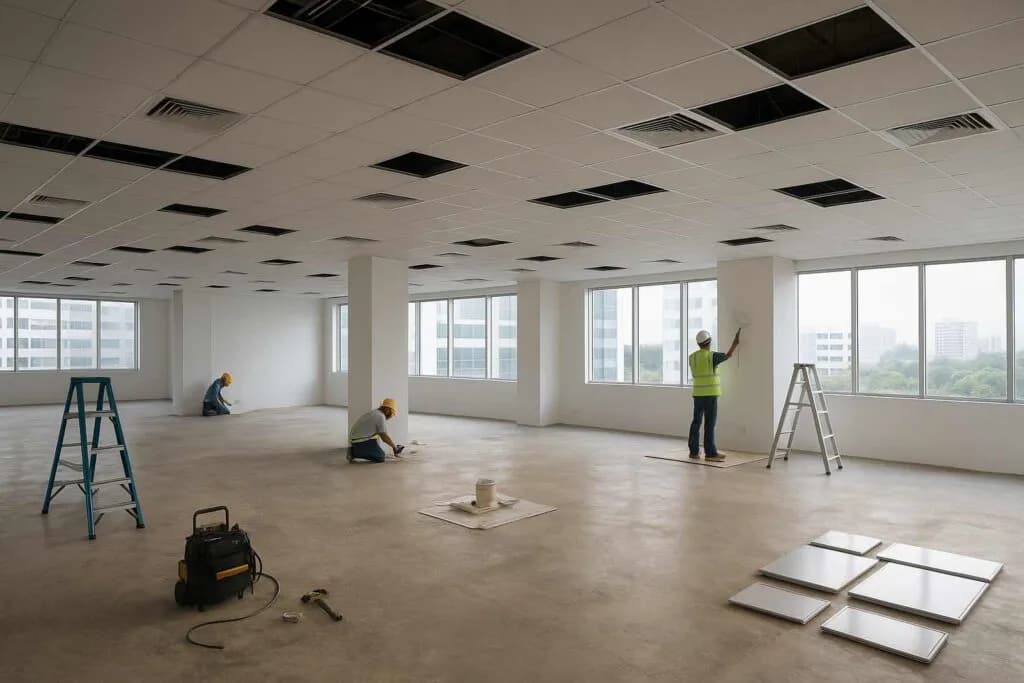
Reinstatement is the process of returning a rented property to the condition it was in when you first took possession, or to a condition defined in your tenancy agreement. In Singapore, reinstatement is one of the most common sources of deposit disputes between landlords and tenants, largely because the scope is often vague and the expectations on both sides are different.
This guide from RR Handyman Service explains what reinstatement typically involves, how it differs across HDB flats, condominiums and commercial units, what it costs, and how to avoid the arguments that cost both sides time and money.
What Is Reinstatement?
Reinstatement covers two distinct things, and it is important not to confuse them.
- Restoring alterations. If you installed built-in carpentry, additional lighting points, partitions or a feature wall during your tenancy, reinstatement usually requires removing them and restoring the original surface.
- Restoring condition. Beyond alterations, the unit should be returned in a reasonably clean and undamaged state, allowing for fair wear and tear from normal use.
Fair wear and tear is generally accepted and should not be charged to the tenant. Damage beyond normal use, however, usually is.
What Reinstatement Typically Includes
| Item | Usually Reinstated | Notes |
|---|---|---|
| Built-in wardrobes and cabinets | Yes | If installed by the tenant |
| Additional lighting points | Yes | Restore to original wiring layout |
| Partition walls | Yes | Removed and wall reinstated |
| Feature walls and panelling | Yes | Removed and wall patched |
| Flooring installed by tenant | Depends | Often retained if landlord agrees |
| Painting | Usually | Repaint to original colour if changed |
| Curtain tracks and blinds | Depends | Often retained if in good condition |
| Air-conditioner servicing | Yes | Usually required quarterly with records |
| Deep cleaning | Yes | Standard requirement in most agreements |
HDB Reinstatement
For HDB flats, reinstatement requirements come from three sources: the tenancy agreement, HDB rules on approved renovations, and the condition of the flat at the start of the tenancy.
Common HDB reinstatement works include:
- Removing built-in carpentry installed without HDB approval
- Removing unauthorised partitions or room dividers
- Restoring hacked walls or demolished sections
- Reinstating original flooring where it was replaced without approval
- Repainting the unit to the original scheme
- Restoring the kitchen and bathroom fittings to their original state
- Removing any unauthorised fixtures from common areas
If the tenant made unauthorised alterations, the landlord may be required to reinstate them before the next tenancy or before selling the flat.
Condominium Reinstatement
Condominium reinstatement is governed by the tenancy agreement and, for structural works, by MCST rules. MCST approval is required for any works affecting common property, and renovation hours are strictly controlled.
Typical condominium reinstatement works mirror HDB items but often involve more extensive fit-out removal, since tenants in condominiums more frequently install custom interiors.
Office and Commercial Reinstatement
Office reinstatement is usually the most complex and expensive category, because commercial fit-outs tend to be extensive. A typical office reinstatement scope includes:
- Removal of all partitions, meeting rooms and glass walls
- Removal of raised flooring and reinstatement of the base floor
- Removal of ceiling grid, light fittings and air-con diffusers
- Removal of network cabling and reinstatement of electrical points
- Removal of signage and reinstatement of the facade
- Removal of server room equipment and dedicated cooling
- Deep cleaning and final handover to the landlord
Because commercial leases usually specify the reinstatement scope in detail, tenants should review the clause carefully before signing, not at the end of the lease.
Typical Reinstatement Costs in Singapore
| Property Type | Typical Cost (SGD) | Timeline |
|---|---|---|
| HDB 3-room flat, basic reinstatement | $1,500 – $4,000 | 3 – 5 days |
| HDB 4-room flat, moderate reinstatement | $3,000 – $8,000 | 5 – 10 days |
| Condo unit, moderate reinstatement | $4,000 – $12,000 | 7 – 14 days |
| Small office, light fit-out removal | $5,000 – $15,000 | 7 – 14 days |
| Large office or retail unit | $15,000 and above | 2 – 6 weeks |
How to Avoid Deposit Disputes
- Document the unit at the start. Take dated photographs of every room, including any pre-existing damage, before you move in.
- Get approval in writing. Any alteration, even a simple wall shelf, should be agreed in writing with the landlord before installation.
- Clarify reinstatement expectations in the agreement. If the landlord is happy to keep your built-in wardrobe, get that in writing so you do not need to remove it.
- Keep maintenance records. Air-conditioner servicing receipts are commonly required at handover.
- Do a joint inspection. Walk through the unit with the landlord or agent before the handover date and agree on what needs to be done.
- Use a professional reinstatement contractor. Amateur work often fails inspection and costs more to redo.
- Keep receipts. If you pay for reinstatement works, keep the invoices as proof.
The single most important step is the joint inspection. Most disputes arise because the two sides never agreed on the standard of reinstatement before the keys were handed back.
Timeline for a Typical Reinstatement
- Site inspection and scope definition — 1 day
- Quotation and approval — 1 to 2 days
- Dismantling and removal of built-ins — 1 to 3 days
- Hacking and demolition where required — 1 to 3 days
- Patching, plastering and making good — 2 to 4 days
- Painting and final finishes — 2 to 3 days
- Cleaning and handover inspection — 1 day
Frequently Asked Questions
Who pays for reinstatement, landlord or tenant?
In most cases the tenant pays for reinstatement of alterations they made. Structural works or damage caused by the landlord are the landlord responsibility. The tenancy agreement should set this out clearly.
Can the landlord deduct from my deposit for reinstatement?
Yes, if the tenancy agreement allows it and the deduction is reasonable and supported by evidence. Landlords should provide quotations or invoices for the works.
What counts as fair wear and tear?
Faded paint, minor scuff marks, small nail holes from picture hanging, and slight wear on flooring from normal use are generally considered fair wear and tear. Broken tiles, large holes and unrepaired damage are not.
Do I need to repaint the unit at the end of my tenancy?
It depends on the agreement. Many Singapore tenancy agreements require the unit to be repainted to the original colour, or at least in a comparable condition. Check the clause before assuming.
How long does a full reinstatement take?
A typical HDB flat takes one to two weeks depending on the scope. Offices and larger commercial units can take several weeks.
Book Reinstatement Works in Singapore
RR Handyman Service handles reinstatement works for HDB flats, condominiums, offices and retail units across Singapore. We work from your tenancy agreement or landlord requirements, provide itemised quotations and complete the works to a standard that passes handover inspection.
Call or WhatsApp +65 8624 3080 or email rrhandymansg@gmail.com for a free site visit and quotation.