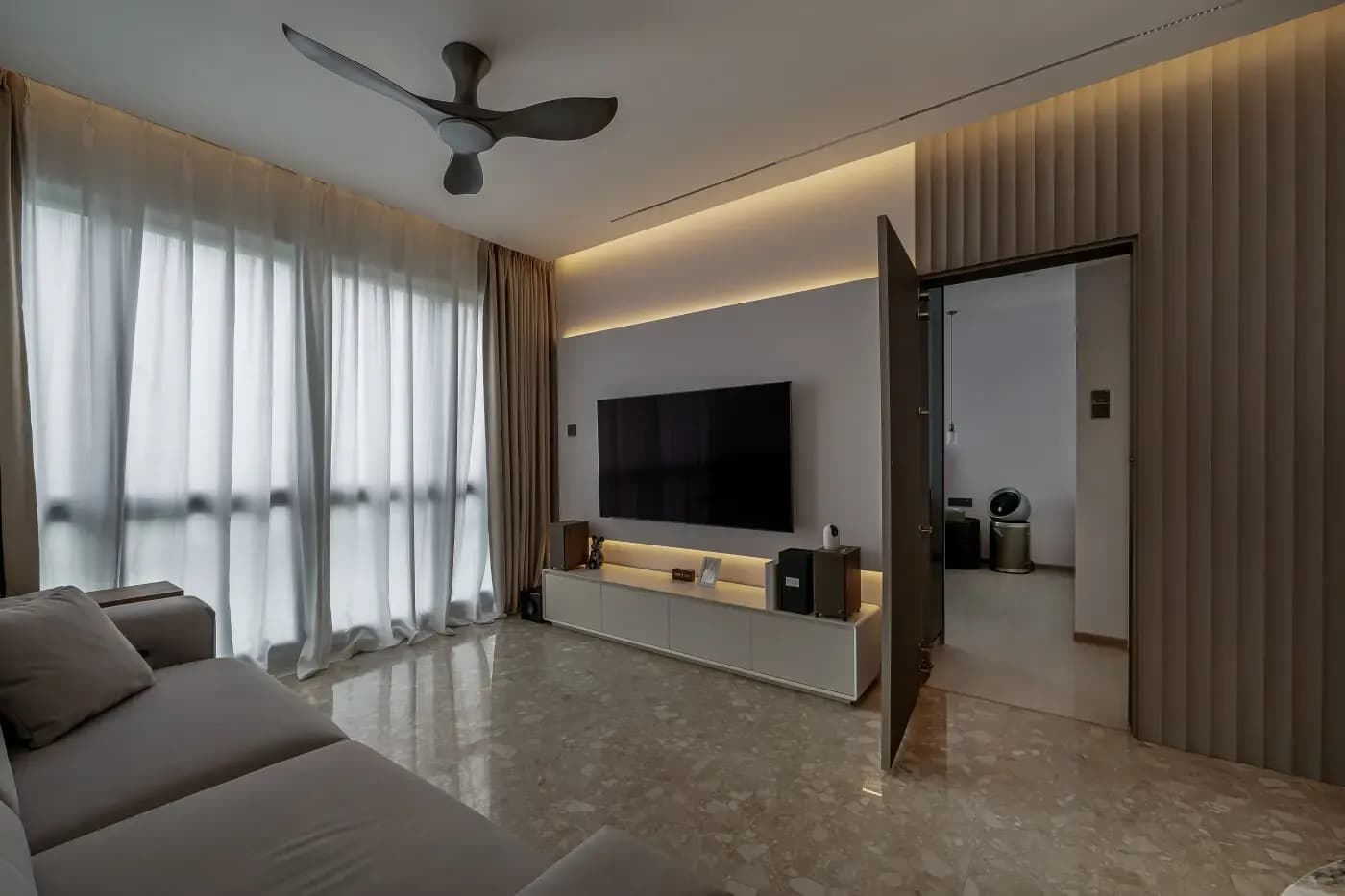
Planning an HDB renovation in Singapore? The single biggest question homeowners ask is simple: how much will it actually cost? In this guide, the team at RR Handyman Service breaks down realistic 2025 pricing for every major renovation component, from hacking and plumbing to carpentry and painting, so you can budget with confidence and avoid the surprises that blow renovation budgets apart.
Whether you have just collected the keys to a resale flat in Serangoon, Ang Mo Kio or Punggol, or you are upgrading the flat you have lived in for fifteen years, the numbers below give you a reliable starting point.
Why HDB Renovation Costs Vary So Much
Two identical four-room flats can receive quotations that differ by forty percent or more. The gap usually comes down to five factors.
- Scope of works — a cosmetic refresh costs far less than a full gut-and-rebuild.
- Material grade — ceramic versus homogenous tiles, laminate versus engineered wood.
- Flat condition — resale flats with failed waterproofing or hollow floor tiles cost more to prepare.
- Access and logistics — no lift access, restricted working hours or MCST rules add labour time.
- Who you hire — a direct handyman team versus a design-and-build firm with a showroom and project managers.
HDB Renovation Cost Breakdown for 2025
The table below reflects typical pricing for a three-room or four-room HDB flat in Singapore. Treat it as a budgeting guide rather than a fixed quotation, because every flat is different.
| Scope of Work | Typical Cost (SGD) | Notes |
|---|---|---|
| Hacking and demolition | $800 – $2,500 | Depends on area of tiles, walls and built-ins removed |
| Plumbing works | $1,200 – $3,500 | New piping, sanitary ware and water heater points |
| Electrical works | $1,500 – $3,500 | New power points, DB box and lighting |
| Waterproofing | $800 – $1,800 | Per bathroom, including ponding test |
| Tiling (floor and wall) | $3,000 – $7,000 | Based on tile size and total area |
| Carpentry | $5,000 – $15,000 | Wardrobes, kitchen cabinets and TV console |
| False ceiling and partitions | $1,800 – $4,500 | L-box and cove designs cost more |
| Painting | $1,200 – $2,800 | Whole flat, two coats plus primer |
| Flooring (vinyl or laminate) | $2,000 – $5,000 | Based on area and material grade |
As a rule of thumb, a comfortable mid-range renovation for a four-room HDB flat in 2025 lands between $35,000 and $55,000. A basic cosmetic refresh can be done for under $20,000, while a full premium rebuild with custom carpentry can exceed $80,000.
1. Hacking and Demolition
Hacking is usually the first trade on site and sets the pace for everything that follows. Costs depend on how much you are removing, whether that is floor tiles, wall tiles, existing kitchen cabinets, bathroom fittings or an old false ceiling.
Two things to watch carefully:
- HDB approval. Hacking of structural walls, or removal of walls listed in the HDB renovation guidelines, requires submission and approval. Never let a contractor start hacking without confirming this in writing.
- Debris disposal. Proper haulage to approved facilities is part of the cost. If a quotation looks unusually cheap, check whether disposal is included or whether the debris will simply be left at your lift lobby.
2. Plumbing and Electrical
Old resale flats often have piping that is decades old. Replacing the water pipes and re-running the electrical wiring is best done while the walls and floors are opened up, not after the tiling is finished.
A typical scope includes new copper or PPR water pipes, new PVC discharge pipes, repositioned tap and shower points, additional power sockets, new lighting points and a new distribution board if required.
Do not bundle this trade into a single lump sum with the tiling and carpentry. Ask for it to be itemised so you can see exactly what you are paying for and challenge anything that looks inflated.
3. Waterproofing
Every wet area, including bathrooms, kitchens, service yards and balconies, should be waterproofed before tiling. This is one of the few areas where cutting corners costs far more later. A failed membrane means hacking out your brand new bathroom and starting again, plus potentially compensating the neighbour below.
A proper waterproofing scope includes surface preparation, angle fillets at floor-to-wall junctions, sealing around pipe collars, two or three coats of membrane, and a ponding test of at least twenty-four hours before tiling begins.
4. Tiling
Tiling cost is driven almost entirely by tile size and total area. Large-format tiles of 600mm by 600mm and above require more levelling and cutting skill, and often cost more in labour. Mosaic tiles cost more still because of the sheer number of joints.
Prices typically range from $8 to $18 per square foot for supply and installation, depending on the tile you choose and the complexity of the layout.
5. Carpentry
Carpentry is usually the largest single line item in a renovation. A full-height built-in wardrobe for a bedroom may cost $1,800 to $3,500. A complete kitchen cabinet run can cost $5,000 to $10,000. A TV console with feature wall panelling can cost $2,000 to $5,000.
Pricing depends on:
- Total length and height of cabinetry
- Material, where moisture-resistant plywood with laminate is standard and veneer or solid timber costs more
- Hardware, where soft-closing hinges and premium drawer runners add cost but last far longer
- Internal fittings such as drawers, pull-out trays and organisers
6. False Ceiling and Partition Works
A flat false ceiling for a living and dining area typically costs $1,800 to $2,800. An L-box or cove lighting design with concealed LED strips costs more because of the additional framing and finishing work involved.
Partition walls are commonly used to carve out a study or walk-in wardrobe from an oversized room. A standard drywall partition costs roughly $80 to $150 per square foot, with rockwool insulation adding cost but significantly improving sound control.
7. Painting
Painting a three-room flat usually costs $1,200 to $2,000 for a single colour throughout, and up to $2,800 if you want multiple accent colours or extensive surface repair.
Always confirm what is included. Is the ceiling painted? Are the door frames and doors painted? Is there a primer coat? Are cracks and nail holes filled and sanded first? A cheap painting quotation often omits these items, which is why the finish fails within a year.
8. Flooring
If you are not retaining your existing floor, vinyl and laminate are the most popular choices for HDB flats. Vinyl is water-resistant and comfortable underfoot, while laminate offers a wider range of wood-look finishes at a slightly lower cost.
Expect to pay $4 to $9 per square foot for vinyl supply and installation, and $5 to $11 per square foot for laminate, depending on thickness and brand.
How to Save Money Without Cutting Corners
- Keep the existing layout. Moving the toilet, kitchen sink or water heater point means new piping runs, new waterproofing and new tiling. Keeping the layout saves thousands.
- Retain sound flooring. If your existing tiles are level and firmly bonded, vinyl can often be laid directly over them.
- Reduce custom carpentry. Use off-the-shelf wardrobes and shelving where the space allows.
- Choose mid-range tiles. A well-chosen 300mm by 600mm tile looks just as good as a large-format one and costs far less to install.
- Never skip waterproofing or surface preparation. This is where the real savings are lost.
Typical Renovation Timeline
A full HDB renovation usually takes six to ten weeks from the start of hacking to final handover. Here is the typical sequence.
- Hacking and demolition — three to five days
- Plumbing and electrical rough-in — three to five days
- Waterproofing and ponding test — four to six days
- Tiling — five to ten days
- Carpentry installation — two to five days
- False ceiling and painting — four to seven days
- Finishing, cleaning and snagging — two to four days
Frequently Asked Questions
Do I need HDB approval for my renovation?
Yes for certain works. Hacking of structural walls, removal of certain walls and some plumbing changes require submission. Your contractor should advise you on what applies to your unit, and you should never proceed without written confirmation.
How long does HDB renovation approval take?
Approval is typically granted within a few working days once the submission is complete, but you should allow one to two weeks to be safe, especially during peak renovation periods.
Can I stay in my flat during renovation?
It is possible for minor works, but for a full renovation involving hacking, waterproofing and carpentry, we strongly recommend vacating. Dust, noise and the lack of a working bathroom make it impractical to stay.
What contingency should I set aside?
We recommend setting aside ten to fifteen percent of your renovation budget as a contingency. Unexpected issues such as concealed pipe leaks, hollow floor tiles or structural surprises behind a wall are common in resale flats.
Should I hire one contractor or multiple trades?
Hiring one contractor who coordinates all trades is usually smoother, because the sequencing is handled for you and there is a single point of accountability. Hiring separate trades can be cheaper but requires you to manage the schedule yourself.
Get a Free Renovation Quotation in Singapore
RR Handyman Service provides renovation and reinstatement works across Singapore, including HDB flats, condominiums, offices and retail units. We provide itemised quotations, realistic timelines and a workmanship warranty on every project.
Call or WhatsApp us at +65 8624 3080 or email rrhandymansg@gmail.com to arrange a free site visit and quotation.