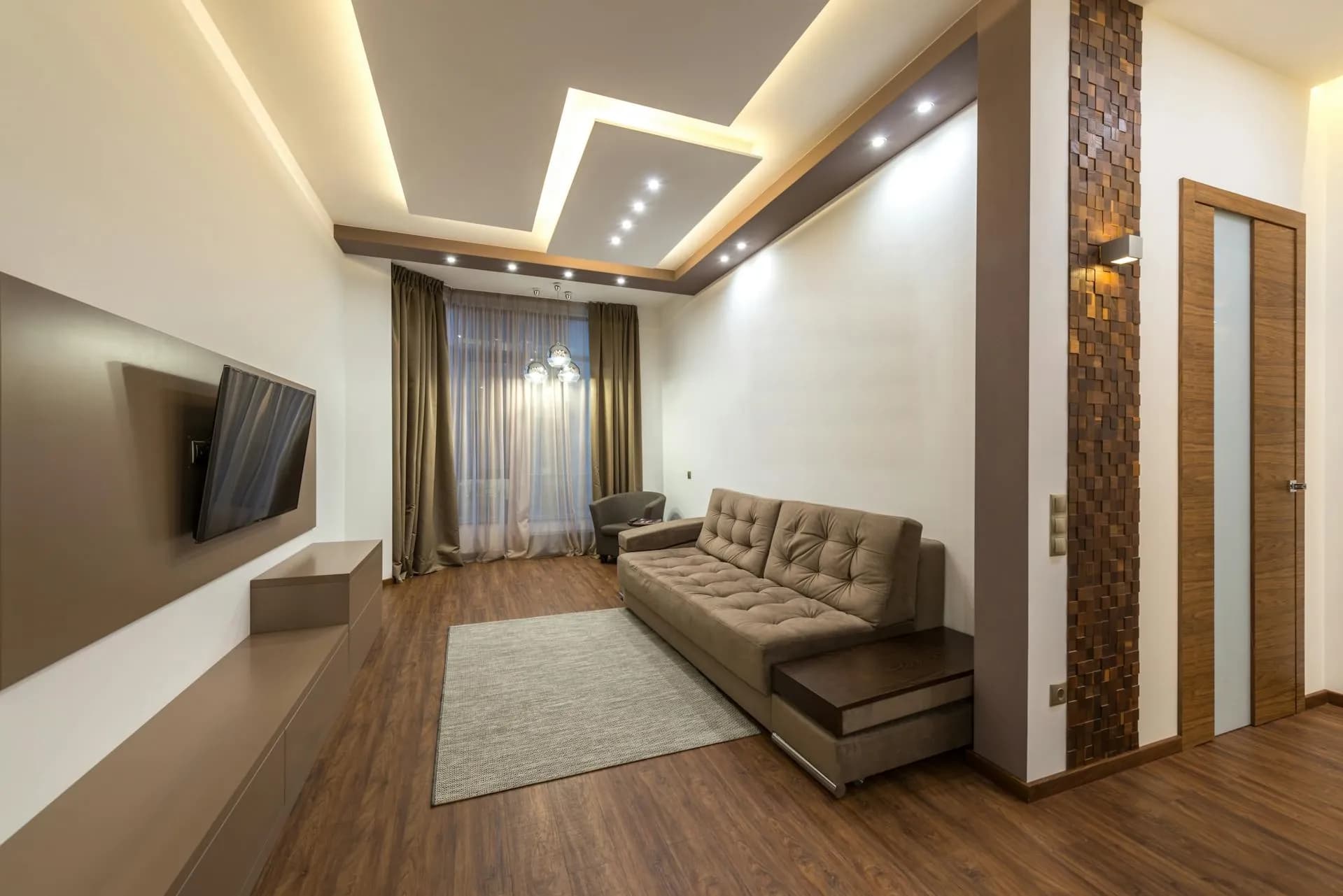
A well-designed false ceiling can transform the look of a Singapore home. It hides wiring and air-conditioning trunking, allows for layered lighting, softens the harshness of a bare concrete slab, and can subtly define different zones in an open-plan layout.
A badly built false ceiling, on the other hand, cracks within months, sags in the corners, shows wavy edges and turns a good renovation into a permanent eyesore. This guide from RR Handyman Service explains what to know before you install one.
The Main Types of False Ceiling
Flat Plasterboard Ceiling
The simplest and most common option. A flat ceiling is installed at a uniform height, concealing wiring, trunking and any surface imperfections. It creates a clean, modern look and is the most budget-friendly option.
L-Box Ceiling
An L-box creates a horizontal ledge around the perimeter of the room, usually housing concealed LED strip lighting. It is widely used in Singapore living and dining areas because it adds visual interest without overwhelming the space.
Cove Lighting Ceiling
A trough-shaped recess around the room perimeter into which LED strips are placed, producing a soft indirect glow. Often combined with an L-box or a central recessed panel.
Island or Drop Ceiling
A raised or dropped section in the middle of the room, used to define a zone such as a dining area or to house a ceiling fan and pendant lights.
Grid or Exposed Ceiling
A suspended grid system commonly used in offices, retail and industrial spaces. Easy to access for maintenance but less suited to homes.
False Ceiling Costs in Singapore
| Ceiling Type | Typical Cost (SGD per sq ft) | Notes |
|---|---|---|
| Flat plasterboard ceiling | $4 – $7 | Most affordable option |
| L-box design | $7 – $12 | Based on linear metre of the box |
| Cove lighting recess | $8 – $14 | Excludes LED strip and driver |
| Island or drop ceiling | $6 – $10 | Depends on size and shape |
| Access panel installation | $60 – $150 each | For air-con and plumbing access |
| Skim coat and painting | $1.50 – $3 per sq ft | Usually quoted separately |
For a typical three-room or four-room HDB flat, a full false ceiling with an L-box in the living and dining area and flat ceilings in the bedrooms typically costs between $2,500 and $5,000, including skim coat and painting.
How Much Ceiling Height Will You Lose?
- Flat ceiling: 100mm to 150mm
- L-box design: 200mm to 300mm, depending on the depth required to conceal the LED
- Cove with concealed air-con: 300mm to 400mm
- Island with pendant lights: variable, often 150mm to 250mm
For HDB flats with a standard ceiling height of around 2.6 metres, a flat ceiling or a modest L-box will not feel oppressive. A deep cove design in a low flat will.
If your flat has a ceiling height under 2.5 metres, keep the false ceiling shallow or restrict it to the perimeter only. A full drop ceiling in a low flat makes the entire unit feel cramped.
Materials Used in Singapore
- Plasterboard: The standard material. Available in 9mm and 12mm thicknesses, with moisture-resistant and fire-rated variants.
- Metal framing: Galvanised steel channels and furring, which resist warping and termites far better than timber.
- Joint compound and tape: Used to treat the joints between boards, and the single biggest factor in whether the ceiling cracks.
- Skim coat: Applied over the boards to create a smooth, paint-ready surface.
Moisture-resistant plasterboard should always be used in bathrooms and kitchens. Fire-rated board is required in certain commercial and multi-unit applications.
The Correct Installation Process
- Site survey and design. Measure the area, check ceiling height, note the position of air-con units, downlights and any existing services.
- Framing. Install the metal framing grid with correct support spacing, typically 400mm to 600mm centres, and adequate bracing.
- Services coordination. Run electrical wiring, air-con piping and any other services before the boards go up.
- Boarding. Fix the plasterboards to the framing with staggered joints, using the correct screw spacing.
- Joint treatment. Tape and fill all joints, corners and screw heads, then sand smooth.
- Skim coat. Apply a skim coat over the entire surface for a uniform finish.
- Painting. Apply primer and finishing coats.
- Lighting and fittings. Install downlights, LED strips and any other fixtures.
Common Mistakes to Avoid
- Insufficient framing support. This is the leading cause of sagging and cracking.
- Not using joint tape. Simply filling joints with compound without tape guarantees cracking.
- Skipping the skim coat. Without it, board joints and screw heads remain visible after painting.
- Installing lighting after the ceiling is painted. Cutting holes afterward creates dust and can damage the finish.
- Forgetting access panels. You need access to air-con units, water heaters and plumbing above the ceiling.
- Using timber framing. It is cheaper but warps with humidity and is vulnerable to termites.
- Ignoring air-con position. The ceiling design should work with the air-con, not around it after the fact.
Design Ideas for Singapore Homes
- L-box with warm LED: A classic, timeless look for living and dining areas.
- Floating ceiling with pendant lights: Ideal over a dining table or kitchen island.
- Curved or organic shapes: Adds softness in an otherwise rectangular room, popular in modern condominium interiors.
- Recessed panel with cove lighting: Creates a layered lighting effect and hides the air-con unit neatly.
- Wood-look ceiling battens: Adds warmth and texture while retaining the false ceiling underneath.
How Long Does Installation Take?
A single living and dining area usually takes two to four days including framing, boarding, joint treatment and skim coat. Full-flat installations typically take five to seven days. Painting is usually done separately and adds another one to two days.
Frequently Asked Questions
Is a false ceiling necessary in an HDB flat?
No, but it is often used to conceal air-con trunking, wiring and surface imperfections, and to allow for cove lighting and downlights. It is a design choice rather than a structural requirement.
Will my false ceiling crack over time?
A correctly installed ceiling with proper framing, joint tape and skim coat rarely cracks. Cracks usually result from poor framing, missing joint tape or structural movement above.
Can I install a ceiling fan with a false ceiling?
Yes, provided the fan is anchored to the structural slab above and not to the plasterboard. Your contractor should plan for a reinforced mount during framing.
How do I access the air-con unit above the ceiling?
Ask for an access panel to be installed at each service point. These are discreet, easy to open and essential for maintenance.
Do I need to paint the ceiling after installation?
Yes. Plasterboard and skim coat must be primed and painted. Most contractors offer painting as an add-on so it is completed in one coordinated package.
Get a False Ceiling Quotation in Singapore
RR Handyman Service designs and installs plasterboard false ceilings, L-box and cove lighting features, partition walls and access panels across Singapore homes, offices and retail units. We use galvanised framing, proper joint treatment and paint-ready finishing on every job.
Call or WhatsApp +65 8624 3080 or email rrhandymansg@gmail.com for a free quotation.